Interest in Christopher Nolan's upcoming film, based on Homer's "The Odyssey," has increased significantly following the release of a new trailer and the director's rare appearance on Stephen Colbert's American show.
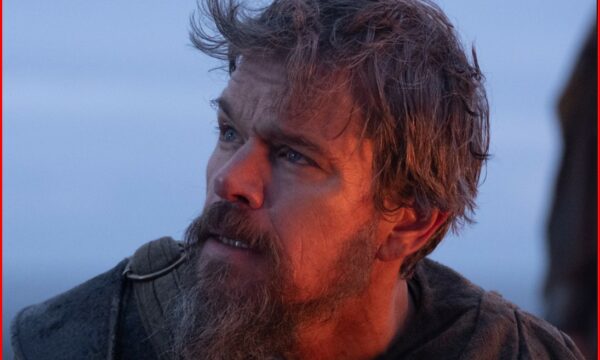
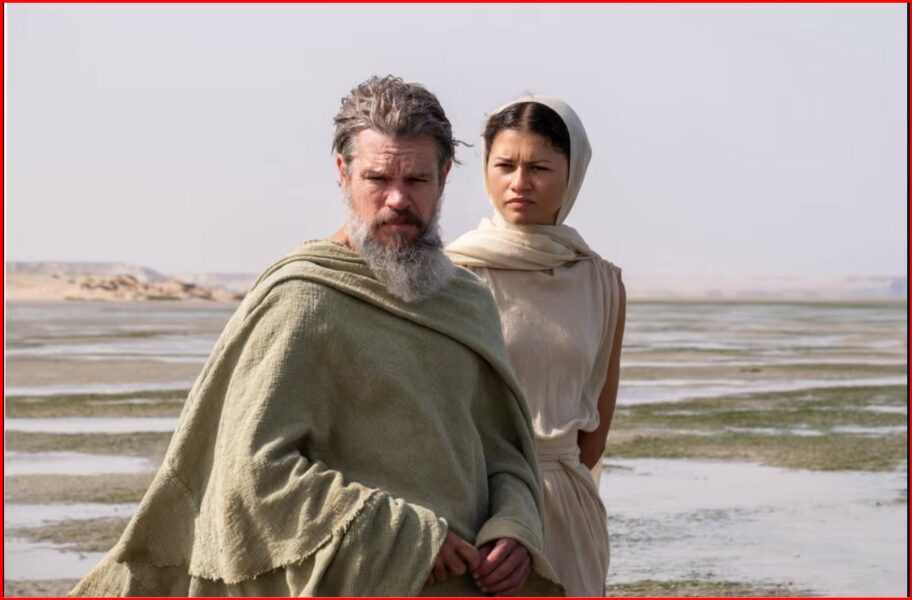
The film, starring Matt Damon as Odysseus, is expected to be released on July 17, while the first materials have begun to reveal how Nolan has decided to bring one of the greatest epics of ancient literature to the screen.
Details about the film have been gradually revealed over the past few months. First a teaser was released in theaters, then a six-minute prologue, and, most recently, a new trailer that gives a clearer picture of the world Nolan is building.
From the released footage, it seems that many of the most famous characters and episodes from "The Odyssey" will be part of the film. The trailer shows the Cyclops, the whirlpool of Charybdis, and the moment when Odysseus calls the spirits of the dead.
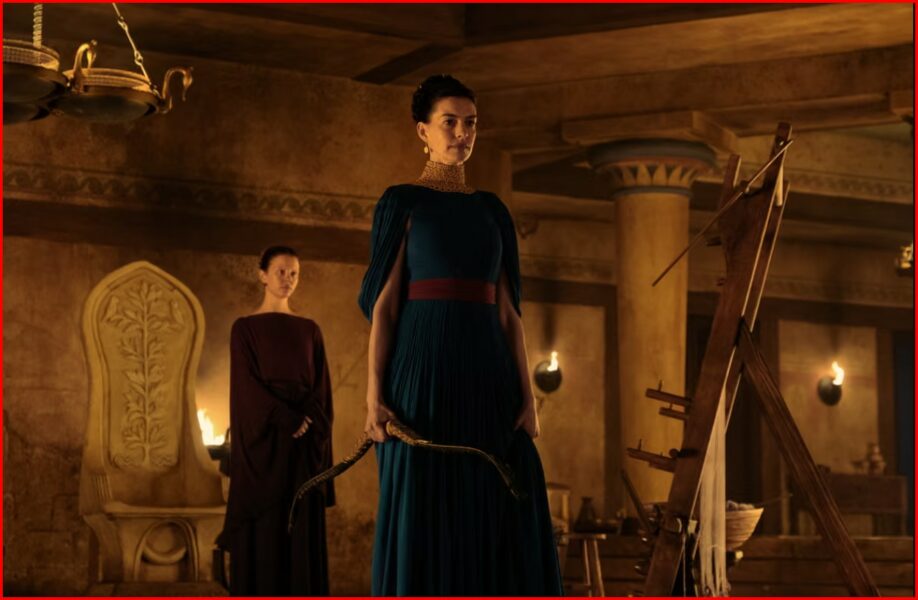
Also, the crisis on his island, Ithaca, takes an important place, with Robert Pattinson playing Antinous, one of the most hated suitors who seek to take Penelope, played by Anne Hathaway, while tormenting Odysseus' son, Telemachus, played by Tom Holland.
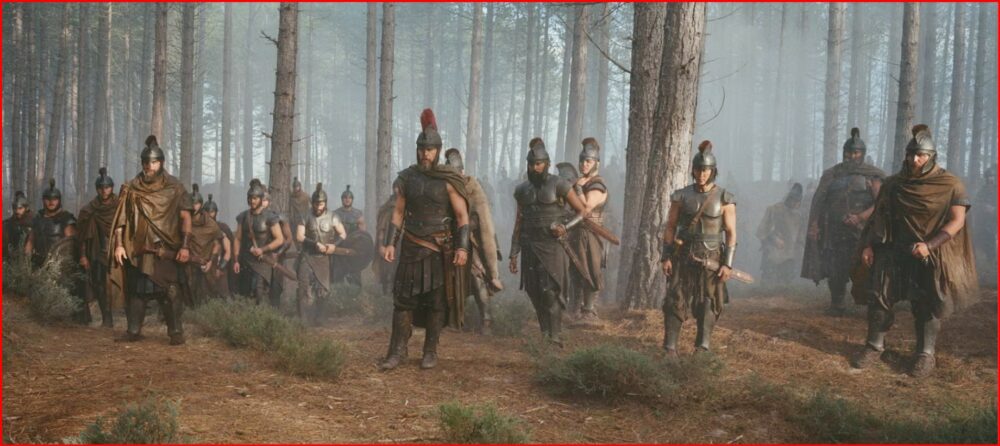
Nolan couldn't resist the famous wooden horse, the trick devised by Odysseus to allow the Greeks to enter Troy. Although Homer doesn't directly tell the story of the horse in "The Odyssey," it is mentioned in the poem through the stories of other characters. For Nolan, this seems to have been one of the images that has haunted him for a long time.
It's still unknown how Circe, the sorceress who turns men into pigs and then returns them to human form, will be portrayed, or how composer Ludwig Göransson will create the voice of the Sirens. However, it seems that most of the epic's most famous moments will be brought to life on screen, and even Odysseus' faithful dog, Argus, appears in the new trailer.
Nolan, known for his great cinematic spectacles with intellectual construction, seems a natural choice for "The Odyssey," a work of vast proportions and timeless themes such as family, homecoming, and revenge.
In the interview with Colbert, the director said he's always looking for something that hasn't been done before on this scale. According to him, Greek mythology has never been treated in a big, high-budget studio film, where everything is thrown onto the screen with maximum ambition. For Nolan, "The Odyssey" is one of the greatest adventure stories and deserves to be treated seriously.
It's somewhat surprising that "The Odyssey" hasn't had a definitive cinematic version before. The era of epic films of the '50s and '60s was inspired more by the Bible and ancient Rome than by Greek mythology.
There have been other versions, such as the 1954 Italian film "Ulysses" starring Kirk Douglas, or "The Return" starring Ralph Fiennes and Juliette Binoche, which focused only on the last part of the poem, when Odysseus plans revenge on the suitors.
Nolan's interest in this world can be traced back to Wolfgang Petersen's "Troy," the 2004 film that loosely adapted Homer's "Iliad." At one point, Nolan was considered to replace Petersen on that project, but that didn't happen. He then went on to direct "Batman Begins," the film that catapulted him into the Hollywood directing elite.
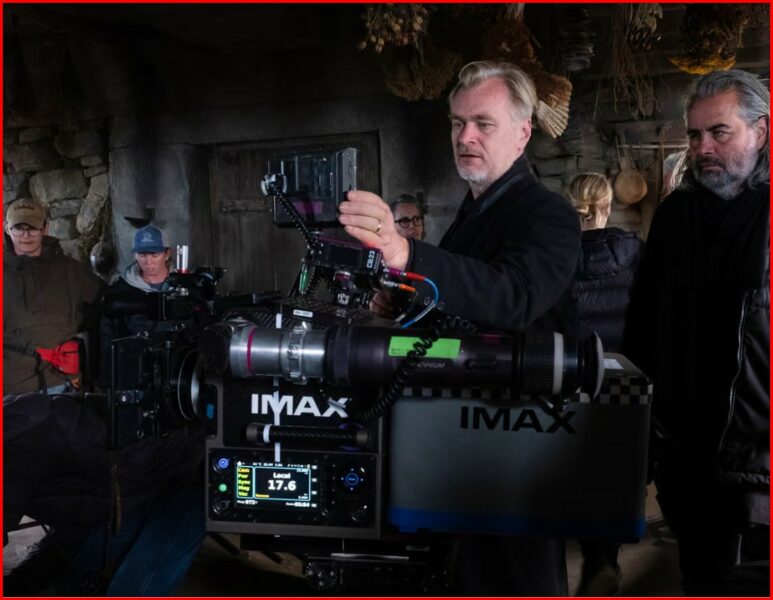
However, the desire to make a Greek epic did not disappear. Nolan himself has admitted that this world has long attracted him, especially certain images, such as the Trojan Horse and the way it could be presented in cinema.
One of the elements that probably attracted him the most is the narrative structure of “The Odyssey.” Nolan has called the poem “the first nonlinear narrative.” This approach suits the director, who has used nonlinear narrative frequently, from “Following” and “Memento” to “Inception,” “Interstellar,” and “Tenet.”
Homer's poem does not deal with black holes or reversed chronology, but has several narrative lines and uses memories, digressions, and narratives within the narrative. Many of the most famous episodes, including encounters with the Cyclops, Circe, the Sirens, Scylla, and Charybdis, are told in retrospect by Odysseus himself, when he is a guest of the Phaeacians.
Nolan has confirmed that the film will begin in Ithaca, without Odysseus, as in the poem. This shows that he intended to stay close to the original text. Another hint is the possible presence of the gods, with Zendaya reportedly set to play Athena, the protector and helper of Odysseus and Telemachus.
When asked if the film will include gods, Nolan didn't give a direct answer, but suggested that the film will reflect the way people of that world saw the divine everywhere: in thunder, in waves, in wind, and in the forces of nature.
This is one of the biggest challenges for any modern adaptation of Homer. Many films have abandoned the direct intervention of the gods in people's lives, but in the original works they are essential.
The next question is how far Nolan will go with the more difficult and problematic aspects of “The Odyssey.” Will Odysseus’s relationships with Circe and Calypso be featured, as in the poem? Will slavery, an important element of the world described by Homer, be addressed? Many servant characters in the poem are in fact enslaved, while the palace civilization of the time relied on forced labor.
It remains to be seen how the revenge against the suitors will be handled. In the poem, all are killed, although Homer gives their portrayal some nuance. Most difficult of all is the issue of the 12 enslaved women, who had relations with the suitors, perhaps against their will, and who in the text are executed by Telemachus. The presence of the character Melantho in the cast, with Mia Goth in the role, suggests that this line may be touched upon, although previous adaptations have usually avoided it.
Yet it is precisely these dark details and strong images that show why “The Odyssey” can work so well in cinema. Homer has an extraordinary visual power. One example is the scene when the monster Scylla kidnaps six of Odysseus’ companions from the ship. Odysseus’s narration, as he sees their hands and feet raised high, seems like a shot ready for the camera.
It will be interesting to see what Nolan will do with these moments and whether his "Odyssey" will be simply a grand spectacle or an adaptation that approaches the complexity, beauty and brutality of Homer's text. /GazetaExpress/






 t7 live