
Lajme
Shqiperi Maqedoni Foleja.com ImpresumOp/Ed
Shkurt e ShqipSport

Gazeta Express
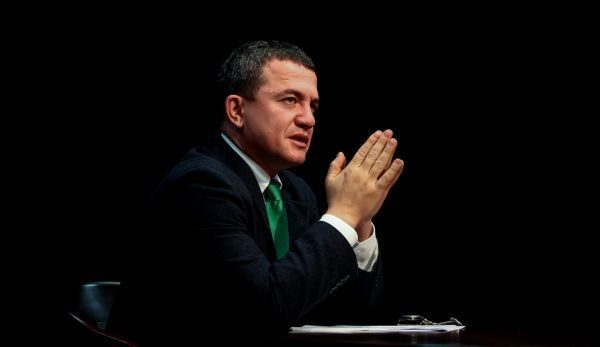
01/03/2020 17:28Opinion by Berat Buzhala: Why I am afraid of Albin
Gazeta Express
01/03/2020 17:28He is a bookworm, speaks foreign languages, travelled the world, in one hand he is a cosmopolitan, but on the other hand, his life activity is of a pretended apostle, capable of gathering around hordes of blind vigilantes, ready to agitate against everyone who dares challenging his opinion. He should urgently change his way of operation.
by Berat Buzhala
Today I am 44 and if I turn my head back, I disagree, and in cases feel ashamed, of many decisions and actions I have taken in life.
For instance, as a young man, of course influenced by the environment and a very few sources of information, I used to think that homosexuals deserve no rights, and let alone get married or have children. There were cases when I have agreed with Hitler on certain segments. “He was wrong, but…” maybe it slipped me a few times such a sentence. I do not know what was going in on inside my head. Later, during 90s, religion started influencing my social standpoint. All should be converted to Christianity, if we want to be liberated from Serbia. A mini me James Huntington from a remote village of Kosovo. I jumped to these conclusions without making any thorough analysis.
A few years later, I was ready to give the Berat I used to be a slap in his face. In fact, even today I think the opposite: We were liberated, because we were majority Muslims. And so on.
I do not know what I was thinking when I referred to Hashim Thaci as “Lionel Messi.” Or when I decided opening a quarry business. Who knows what I would be thinking after 20 years of what I am doing or writing today.
But I am not the only one. We read and learn that people all over the world have regretted of their deeds. We read their mistakes and lessons which needs to be learned. It would be great to learn from mistakes of others, but it turns out this is very difficult. We need a tough and unforgettable lesson to learn.
Only Albin Kurti is never wrong. He never made a mistake. At least, we never heard him accepting that. It is him who in TV studios speaks about the importance of the NATO troops deployment in Kosovo, but it is impossible hear him admitting that he was completely wrong during a key historical moment, when Kosovo needed national consensus to sign the Ramboulliet Agreement, which enabled NATO to launch an air campaign against Serbian military targets. I never heard Albin admitting he was wrong.
I never heard him showing any sign of repentance for radically opposing to the Ahtisaari Package, which brought Kosovo more than 100 recognitions. I never heard him regretting for his statement that “people of Kosovo do not love America, but simply are afraid of it.” Furthermore, I never heard him showing any sign of regret when in his presence in Tirana, a singer of Roma community was beaten, just because he played tunes of a song with Slavic motives, maybe Serbian motives.
Admitting mistakes is not in Albanian tradition after all. This is not a vice only of Albin Kurti. But, time after time, I heard other Albanian leaders admitting that in a certain moment of time they were wrong. I heard Albanian writer Ismail Kadare admitting that Rugova was right, whereas he was wrong. I heard also Sali Berisha admitting he was wrong for opposing Rugova. I heard former Labour Party leader, Tony Blair, admitting that he was wrong about the war in Iraq. Also a leader such as Barack Obama, at the end of his Presidency, admitted that he was completely wrong on how he approached the war in Libya and efforts to get out of power dictator Gadhafi. To simplify this, just enter Google and ask in English “n.n. admits he was wrong” and see what results you will get. If you search for same patterns in Albanian under Albin Kurti’s name, the only results you will find are: “Kurti: The US also might make mistakes”; “Kurti: Ibrahim Rugova was wrong.” He never regretted of anything he said.
Potential changes he makes, most of them of symbolic nature, are superficial, by not admitting that he made mistakes during a growing-up phase. Kurti went to pay homages to Rugova’s grave, after many hesitations, but he never said he was wrong about him.
Speaks about respecting state symbols, but he avoids commenting the time he made fun of them. Potential symbolic changes of Kurti come only when he feels under pressure, but by not admitting mistakes, he sends a message to his blind militants that the changes he is making are not because he believes in them, but because of pragmatic reasons. Therefore, Kurti’s followers think he never makes mistakes, that he is a kind of disciple who, even when it makes a concession, he acts so not because of his repentance for his earlier statements, but because of pressure.
This is what frights me of Kurti.
A man who loves reading books, speaks foreign languages, travelled the world, who in one hand is cosmopolitan, but on the other hand, his life activity is of an incoming autocrat, who gathers around hordes of vigilantes ready to disturb, either in the streets or in social media, everyone who dares challenging his opinion. As for Kurti himself, he makes no difference of what we are seeing today in the world politics, either in its right or left. This is when today comply policies of Donald Trump with Bernie Sanders. No doubt, Sanders is a progressive politician, whose language compared to Trump, differs as black and white, but Sanders as well, like Kurti, has never regretted of his scandalous past, for supporting the Soviet Union, and a not so small number of leftist dictators in South America. Sanders continues keeping good opinions for Fidel Castro, and, to come a little closer, for a leader of European left, such as Jeremy Corbin. Completely irrational and unmerciful. A politician who competes in a democratic state, such as Great Britain, but in his dreams the ideal state he would like to be is the Soviet Union. A politician who poses for a photo with the leaders of terrorist organisations, such as Hamas and Hezbollah, and on the other hand he has reserved in his vocabulary the worst of all words for a politician such as Tony Blair. In Corbyn’s eyes and mind, who got what he deserved in elections, it is Blair who makes the world worse rather than Hasan Nasrallah of Hesbollah. In these territories operate other autocrats, such as Orban, Erdogan or Putin. The three last ones helped their people recover economically. Russian economy under Putin is nearly quadrupled, and the same happened with the Turkish or Hungarian economy under Erdogan and Orban respectively. But the common denominator of all these leaders is killing democracy in the countries they rule. There are no free media or civil society, but only aggressive supporters, almost paramilitaries, who are capable of taking justice in their hands to defend the sinless figure of their leader, I am accentuating sinless, because in their eyes, their leaders have something divine.
The most recent case was last week. After tremendous international pressure, prime minister Kurti abolished tariffs on Serbian goods – and he did a good job when acting so – but, because of his hesitation, the way how he said this, he managed to sell this decision to a no-so-small number of his supporters as a victory. The best thing in all this story is that Kurti, after all, is a coalition with another political entity – the LDK, represented equally in Parliament with his party – the Vetevendosje. Without a political balance, things would have escalated dangerously. In April 2019, I wrote an opinion in Gazeta Express under the headline: “Now is worth supporting Kurti.” It was the time when he launched a campaign all over Kosovo opposing what he called “PAN-theft” (a reference to the then political parties in government – PDK-AAK-Nisma creating the acronym PAN). We see small number of people attending these gatherings. The Vetevendosje was in its lowest point, because almost 40 percent of their MPs created a faction and left the party. The campaign culminated with failure of a public gathering in Pristina, when the Vetevendosje was asking State Chief Prosecutor, Aleksander Lumezi, be dismissed. But none of these reasons convinced me to consider Albin Kurti politically dead or irrelevant. On the contrary, I was and still thinking Albin Kurti is necessary to our democracy, economic development, and fighting corruption. But all these are irrelevant, if Kurti and his organisation think that they should be entertained with dangerous idea of confronting everyone, everywhere, who express different opinions. However, things have not gone too far, but there are clear indications. Let this opinion be an Early Warning.
Share Now
AdvertisementTë tjera nga rubrika

Man City e dyfishon epërsinë ndaj Liverpoolit, shënon përsëri Haaland

Man City kalon në epërsi ndaj Liverpoolit

Barcelona i ofron kontratë të re Christensenit, por me ulje page
Kërcënoi familjen Haradinaj, dërgohet në Psikiatri Korab Bajgora që e konsideron vetën si ‘‘profeti i fundit’’
Azemi: Prokuroria të mos lejojë ndërrimin e njehsorëve pa u mbledhur provat, fshehja e tyre është vepër penale
77 vjetori i themelimit të NATO’s, Haradinaj: FSK e gatshme të bëhet pjesë e Aleancës përkrah SHBA’së
AdvertisementTe fundit
Man City e dyfishon epërsinë ndaj Liverpoolit, shënon përsëri Haaland
Man City kalon në epërsi ndaj Liverpoolit
Barcelona i ofron kontratë të re Christensenit, por me ulje page
Kërcënoi familjen Haradinaj, dërgohet në Psikiatri Korab Bajgora që e konsideron vetën si ‘‘profeti i fundit’’
Azemi: Prokuroria të mos lejojë ndërrimin e njehsorëve pa u mbledhur provat, fshehja e tyre është vepër penale
77 vjetori i themelimit të NATO’s, Haradinaj: FSK e gatshme të bëhet pjesë e Aleancës përkrah SHBA’së
Advertisement✕


