
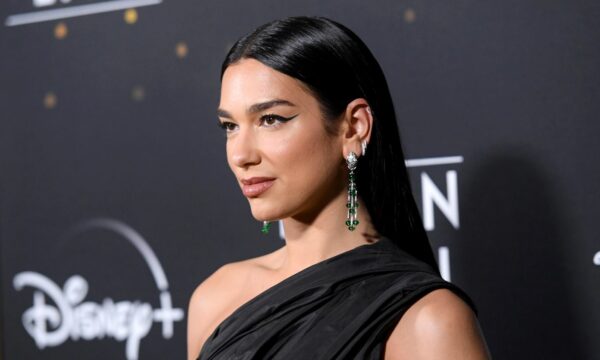
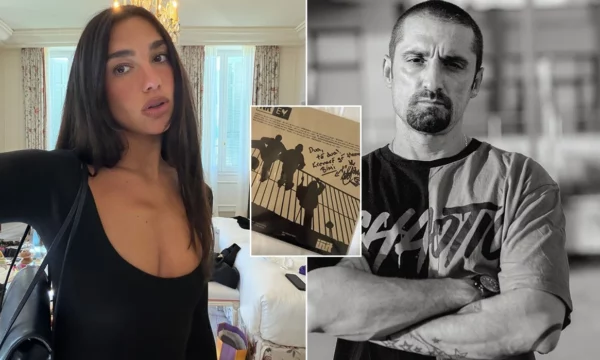
Dua Lipa's story is clear proof that talent, courage, and perseverance can change fate even when others say you can't make it, albinfo reports.
She was born in London in 1995, to Albanian parents who fled Kosovo during the war. From childhood, Dua grew up between two realities: inside the house, Albanian was spoken, Albanian music and culture were heard, while outside she tried to adapt to the rhythm of a metropolis like London. It was a life between identities, but also a path that would gradually shape her as an artist.
Her love for music began early. Dua tried singing at school, but a sentence from a teacher would stay in her mind for a long time: “You’re not meant to sing.” For many young people, such an assessment would be the end of the dream. For her, it was just the beginning of the challenge.
At the age of 11, the family returned to Kosovo, a country still affected by the consequences of war. But in that new reality, Dua felt that she did not find herself. It was clear to her that her dream of music could not take shape where she was. She wanted to return to where she could grow, learn and prove herself: in London.
And at the age of 15, she made a life-changing decision. She returned to London alone, with a courage few teenagers would have. By day she worked to make ends meet – as a waitress and a model, while at night she recorded songs and posted covers online, hoping that one day someone would listen to her. There were no guarantees, no easy path, there was only faith and work.
And one day… someone heard it.
In 2017, the song “New Rules” became a global phenomenon and reached number one in the United Kingdom. It was the moment when Dua Lipa was no longer just a girl who dreamed – but a name that was firmly entering the world stage, albinfo.ch further reports.
But fame didn't come with applause alone. In 2018, after her performance at the Brit Awards, she faced a wave of ridicule and criticism on social media. A viral comment went viral, becoming a symbol of the prejudice that often accompanies emerging artists. For a moment, Dua retreated, left social media and fell silent.
But she didn't give up.
When she came back, she came back stronger, more prepared, and more determined. With the song “Don't Start Now,” she proved that she had not only survived, but had grown. The criticism didn't stop her—on the contrary, it made her stronger.
Dua Lipa didn't change her dream.
She changed the way the world saw her.
And today, her name is sung on every major stage in the world: Dua Lipa.







 t7 live

