
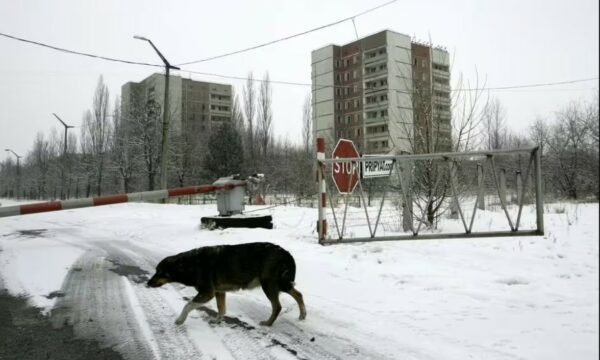
The Chernobyl disaster in 1986 was the world's worst nuclear accident, killing 31 people instantly and affecting thousands more across the region – and the effects were devastating and immediate.
For Oleksiy Breus, who volunteered to enter the control room just hours after the explosion, the experience of the disaster was terrifying and indescribable. He was the last person in the control room when reactor No. 4 failed during a safety inspection. Breus began working at the plant in 1982 and, speaking to the BBC, confirmed that the famous Chernobyl series accurately depicted the rapid and visible effects the explosion had on the human body.
"It looked like it was going to be a mass grave," Oleksiy told Sky News, recalling arriving at work that day in 1986.
“I was sure that the whole night shift had died there. At the moment of the explosion I was in Pripyat, in my apartment. I was fast asleep, I didn’t hear, I didn’t see anything. In the morning I had to go to work, so I went. I didn’t know anything about the disaster, I just took a bus and went to work.”
As he approached the plant, he saw from the bus that the block had been destroyed. “I always say my hair stood on end when I saw it,” he recalls.
In the immediate aftermath, Oleksiy spoke to shift supervisor Oleksandr Akimov and operator Leonid Toptunov. “They didn’t look well, to put it mildly. It was clear they were feeling sick. They were very pale. Toptunov had literally turned white.” Both died within weeks of acute radiation syndrome (ARS).
Oleksiy added: “I also saw other colleagues who were working that night. Their skin was a bright red color. They later died in the Moscow hospital. Radiation exposure, red skin, radiation burns and steam burns were what many people talked about, but they never showed up like that.”
As for his condition, he looked sunburned by the end of the day. “When I finished my shift, my skin was brown, as if I had sunburned everywhere. The parts of my body that weren’t covered by clothes – my hands, face and neck – were red.”
Following the explosion, 29 plant workers and firefighters died from ARS, and two more from accident-related injuries. Plant manager Viktor Bryukhanov, chief engineer Nikolai Fomin, and deputy engineer Anatoly Dyatlov received sentences of 10 years in hard labor for their involvement in the tragedy.
Oleksiy recalls that three workers were forced to crawl under the tunnel to open a broken drainage valve, preventing the leak from reaching the water supply and potentially causing an even more catastrophic explosion. He explained: “It was our job. If I didn’t do it, I could be fired. How was I going to find another job after this?”
Then, miners were hired to clear space under the reactor for a heat exchanger, preventing water contamination and an irreversible fatal chain. Some residents of Pripyat, when they came out to see the chaos, fell ill.
Oleksiy believes that Chernobyl forced the Soviet government to act and put an end to the culture of secrecy: "For example, that unnecessary secrecy was one of the reasons behind the disaster. When the operators pressed the red button, the reactor did not stop, but exploded." /GazetaExpress/











 edition
 t7 live

