
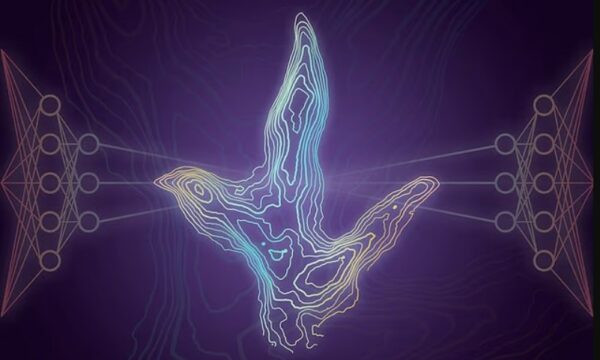
A new application based on artificial intelligence is fundamentally changing the way scientists understand the evolution of flight and the origin of birds.
The app, developed by researchers at the University of Edinburgh, has been used to analyze dinosaur footprints preserved in fossils over 200 million years old. The results have surprised the scientific community: some of these tracks bear “remarkable” similarities to the tracks of birds, both extinct and modern.
According to researchers, this could mean that birds appeared about 60 million years earlier than previously believed.
"This study is a remarkable contribution to paleontology and provides an objective, data-driven way to classify dinosaur tracks - a problem that has puzzled experts for more than a century," said Professor Steve Brusatte, one of the study's authors.
He added that this approach opens up new possibilities for understanding how these impressive animals lived and moved, as well as for determining more precisely when major groups, including birds, appeared. “This computer system may have identified the oldest birds in the world – a fantastic and very promising use of artificial intelligence,” Brusatte said.
Although dinosaur footprints are an important source of information about evolution, interpreting them has always been difficult. Until now, scientists have relied mainly on manual analysis, which often involves subjectivity.
To overcome this problem, the team developed a new app called DinoTracker, which uses advanced algorithms to recognize and classify dinosaur tracks. To train the system, the researchers provided the app with nearly 2,000 fossil tracks, as well as millions of simulated variations that mimicked possible changes such as crushing or edge deformation.
Tests have shown that DinoTracker can identify dinosaur tracks with about 90 percent accuracy, even in scientifically questionable cases.
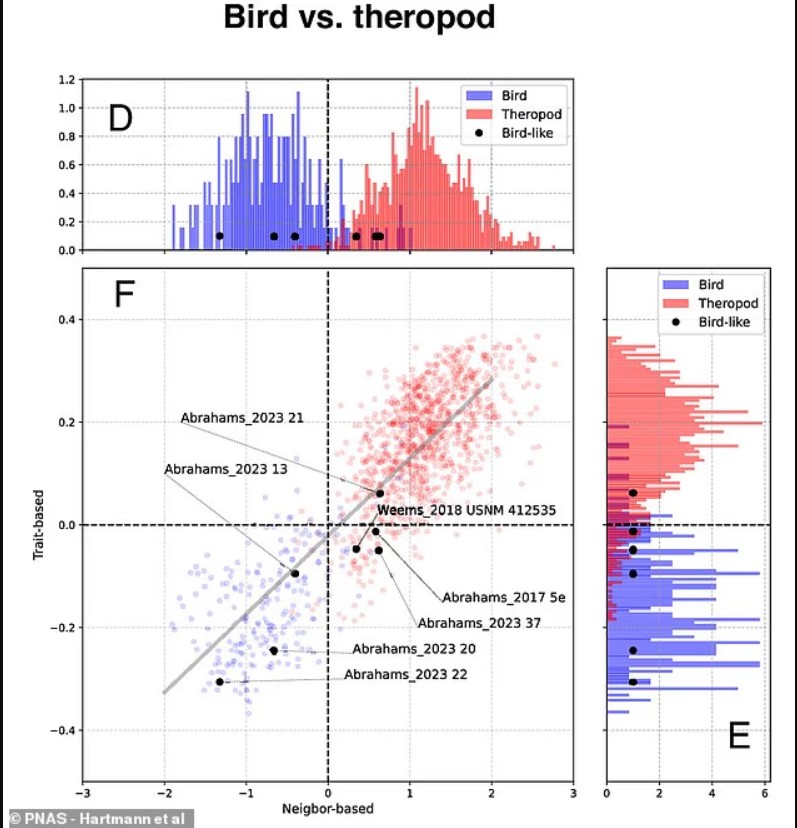
One of the most intriguing discoveries was the similarity between some dinosaur footprints and those of birds. This, the researchers say, either indicates that birds appeared tens of millions of years earlier than previously thought, or that some dinosaurs had bird-like feet simply by chance.
The team also analyzed footprints discovered on the Isle of Skye in Scotland, which have been a mystery to scientists for years. The app's analysis suggests that these footprints may have been created around 170 million years ago by some of the earliest relatives of duck-billed dinosaurs.
In the future, researchers hope this tool will help improve our knowledge of how dinosaurs lived, moved, and spread on Earth.
Dr. Gregor Hartmann from the Helmholtz-Zentrum research center, co-author of the study, emphasized: "Our method offers an unbiased way to identify variations in traces and to test hypotheses about their creators. It is an excellent tool for scientific research, education and even for field work."
What was the “Cambrian Explosion”?
Scientists have long speculated that a huge increase in oxygen during the so-called "Cambrian Explosion" was crucial for the development of many forms of animal life.
This process, about 541 million years ago, marked a period when a great variety of organisms appeared on the evolutionary stage. About 580 million years ago, most organisms were simple, consisting of individual cells or primitive colonies.
In the following 70–80 million years, the pace of evolution accelerated significantly and the diversity of life began to resemble what we know today. This period ended with the Cambrian-Ordovician extinction, about 488 million years ago. /GazetaExpress/














 t7 live

