
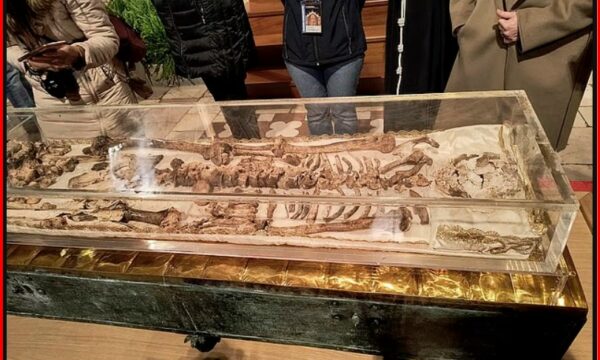
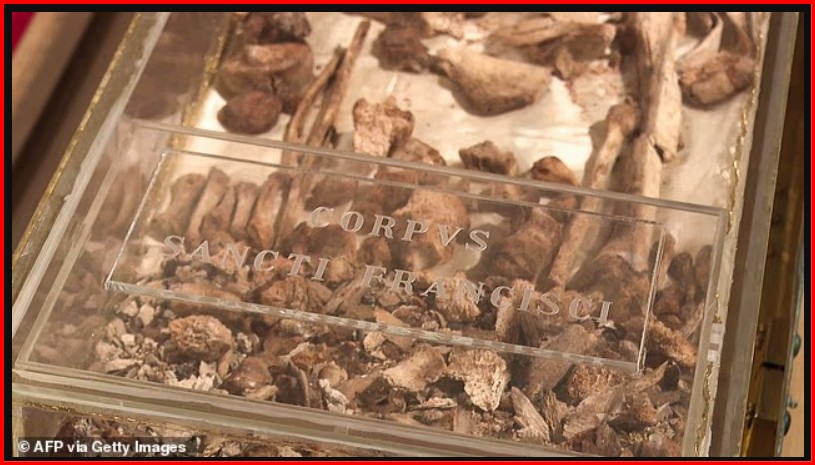
The bones of Saint Francis of Assisi have been put on display for the first time, marking the end of an 800-year-long history surrounding his remains.
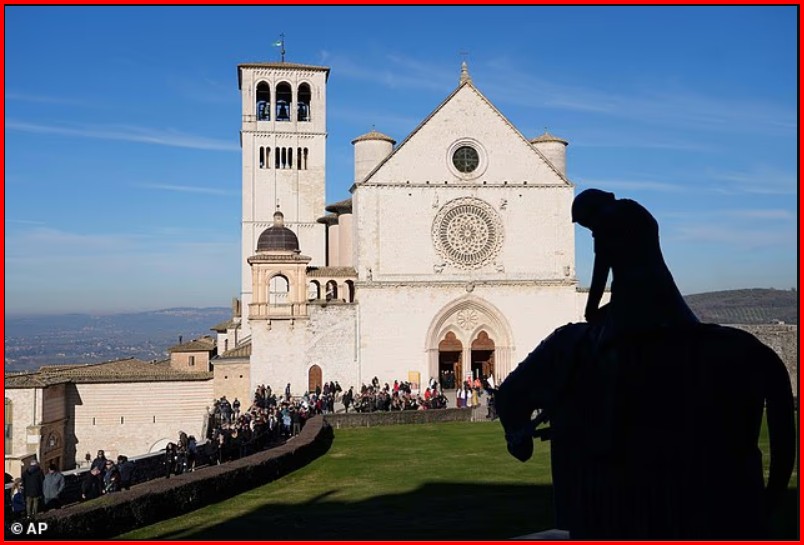
The Franciscan Church decided to put them on display for a month, in honor of the 800th anniversary of the death of Saint Francis in 1226. The remains are kept in a thin, armored Plexiglas box in the lower Basilica of Saint Francis in the Umbrian city of Assisi, Italy.
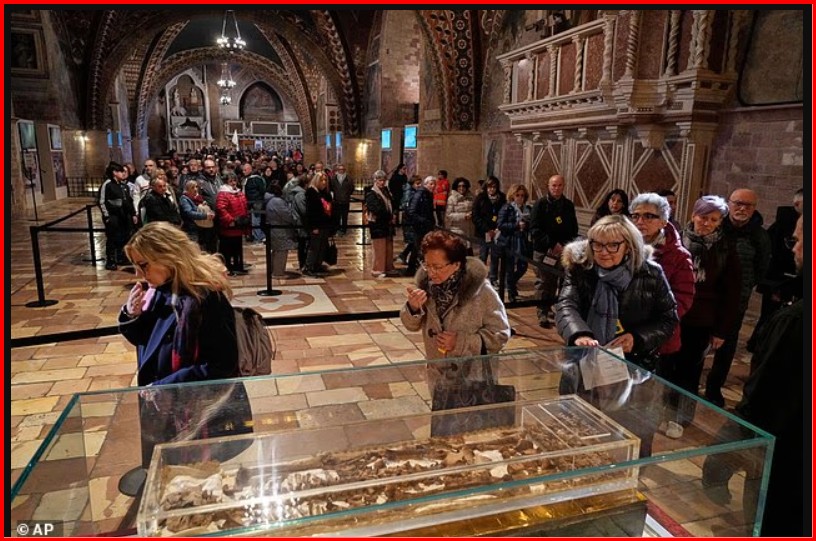
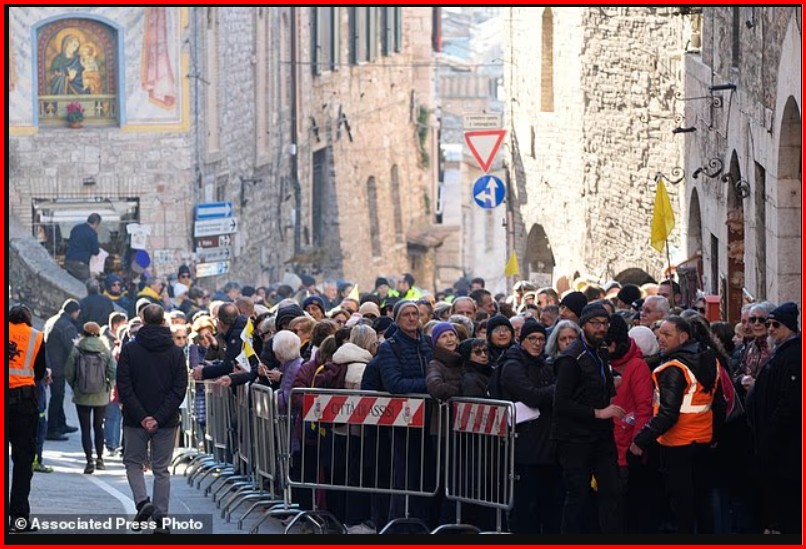
More than 400,000 people have booked visits to spend a few minutes near the remains, but Assisi is expecting up to half a million visitors before St. Francis returns to his tomb on March 22.
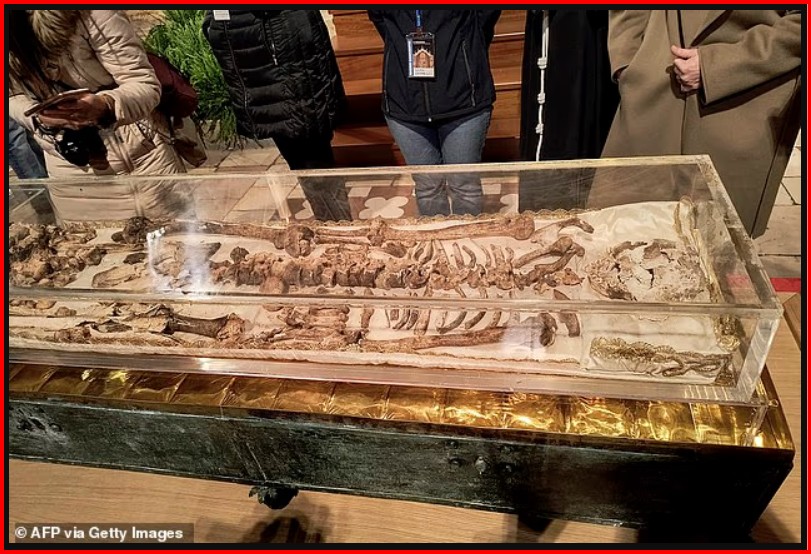
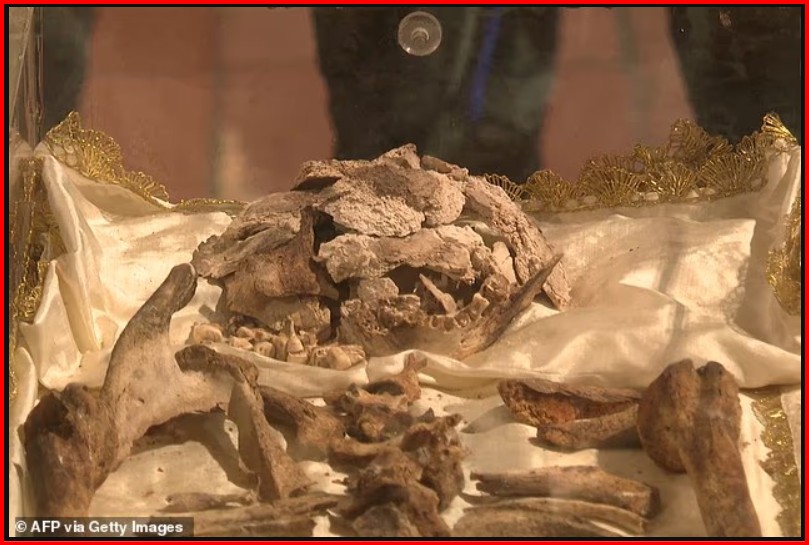
The display of his body is particularly special, given the turbulent history of Saint Francis' remains.
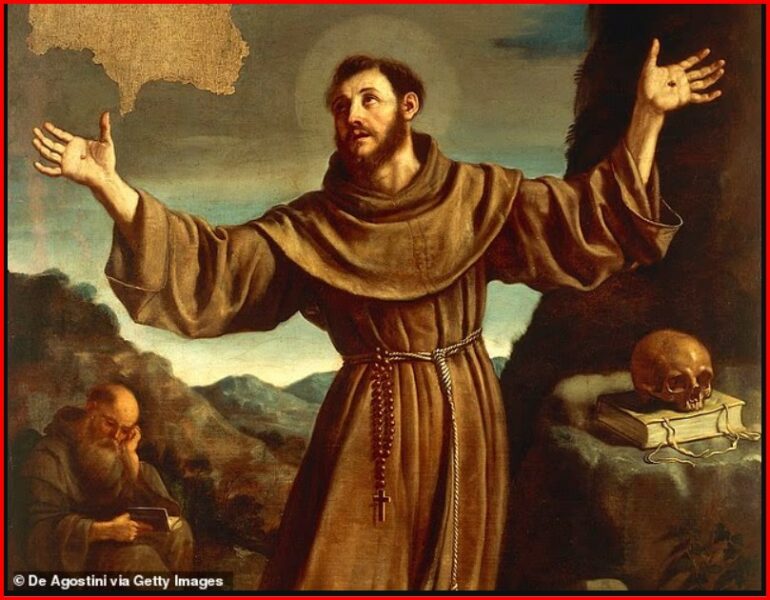
He was the son of a wealthy merchant, born in 1182, who left behind all his wealth to live as a poor Franciscan. The extent of his holiness was so great that it was believed that he developed stigmata – wounds that imitated those of Christ on the cross – towards the end of his life.
However, his body was lost for hundreds of years after one of his followers buried it secretly, fearing it would be stolen during disputes over the relics. In the Middle Ages, it was strongly believed that the remains of saints had the power to cure diseases, ward off disasters, and bring good luck.
Pilgrims flocked by the thousands to the churches with the most famous relics, bringing a steady stream of profitable business. This turned the relics of a particular saint into a business, with their sale, theft, and counterfeiting becoming common practice.
Even during his lifetime, believers are said to have pierced pieces of St. Francis's robes as they passed by, believing they had spiritual powers. Therefore, after his death, his followers decided to hide his body, lest it be stolen or cut up for sale.
Professor William Short of the Franciscan School of Theology at the University of San Diego says: “It was a matter of security and economics. If you have a great saint, a young saint – and this one had the potential to become great – whoever takes the body, takes the cloaks.”
When Saint Francis died on October 3, 1226, he was initially buried in the small church of San Giorgio in Assisi. Within two years, Pope Gregory IX canonized him and laid the foundation stone for a basilica to house his tomb. But the night before the transfer, his trusted assistant, Brother Elias, took the body and buried it secretly inside the basilica, fearing it might be stolen.
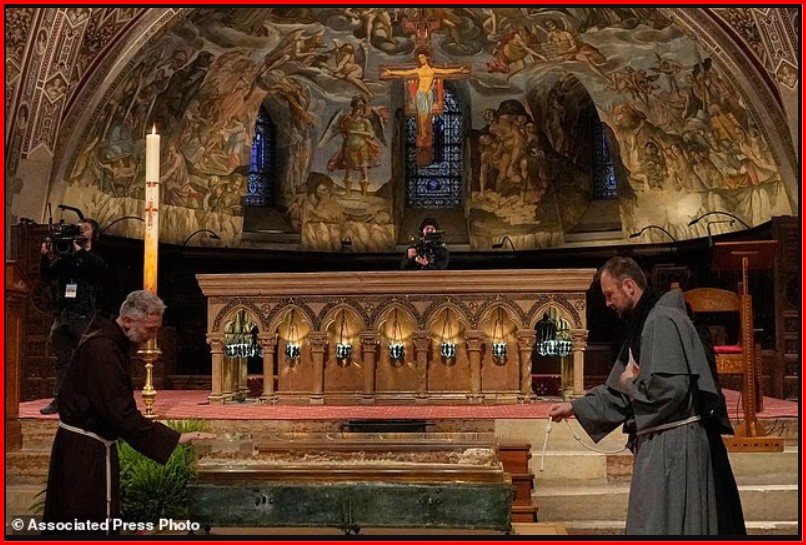
The body remained there, hidden in an unmarked column, until 1818, when excavations uncovered the remains and Pope Pius VII confirmed that they belonged to Saint Francis.
Now, on display to the public for the first time, his remains demonstrate that the fascination with relics has not waned since the Middle Ages.
For the opening of the exhibition, 400 volunteers helped guide thousands of pilgrims through the cobblestone streets of Assisi.
Visitor Silvanella Tamos, from Pordenone, said: "It's a body that seems alive. It's not dead. It still has a lot to tell us."
Fiorella Farina from Reggio Emilia added: "Just talking about it makes me sweat. It's an event I couldn't miss."
In addition to St. Francis, a new saint is attracting a new generation of pilgrims: Carlo Acutis, canonized last year as the first millennial saint by Pope Leo XIV. His popularity, especially among young Latin Americans, has made Assisi a new destination for Catholic youth groups.
However, the huge waves of visitors are causing concern for the city. The narrow networks of alleys and limited services will be stressed by the influx of pilgrims. Assisi Mayor Valter Stoppini says: “We are used to these events, but they usually last one, two or three days. This will last a month, so I am a little worried, but calm.” /GazetaExpress/











 edition
 t7 live

