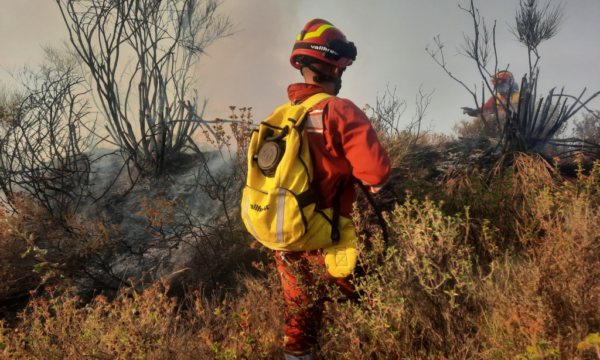
Fires are expected to reach very high levels this year around the world, driven by climate change and the El Niño phenomenon, and have already reached record levels since the beginning of the year, researchers warn.
"This year has started very strongly for the global fire season, with 50% more burned areas compared to the average for this time of year," declared Theodor Kipping during a presentation to journalists.
According to him, this area is "20% larger than the previous record since global monitoring began in 2012", while warning that a "particularly difficult year" is expected.
The total area burned worldwide from the beginning of the year to May 6 has reached 1.63 billion hectares, according to data from the Global Fire Information System (GWIS), compared to the average of 1.1 billion hectares for the period 2012-2025 up to the same date.
The situation is particularly worrying in Africa, where record levels have been recorded in many countries in West Africa and the Sahel region. The fires in the savannah are favored by the alternation of heavy rainfall, which stimulates vegetation, with periods of drought that favor the spread of the flames.
El Niño phenomenon
Researchers also warn of the consequences of the expected return of the natural phenomenon El Niño, which increases global temperatures.
This phenomenon is one of the phases of the natural cycle in the Pacific Ocean, which usually begins in spring and gradually affects temperatures, winds and climate in different parts of the planet in the following months.
The World Meteorological Organization has warned that, although uncertainties remain, the return of El Niño from May to July is becoming increasingly likely, while the opposite phenomenon, La Niña, is weakening. This is expected to add to the continued rise in temperatures caused by human activity.
"The potential for extreme and dangerous wildfires could be among the highest in recent history if a strong El Niño develops," Kipping said. The phenomenon could create intense heat and drought conditions in Australia, the northwestern United States and Canada, as well as in the Amazon rainforest, he said.
Friederike Otto also stressed that the development of a strong El Niño this year, combined with the effects of climate change, could bring about "unprecedented extreme climate phenomena."









 t7 live