
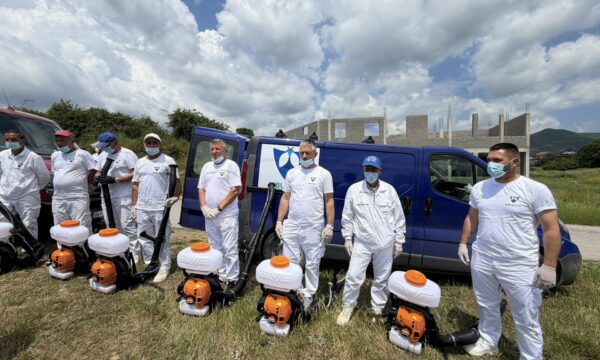
In Malisheva, the disinfestation process has begun in areas with high risk of Crimean-Congo Hemorrhagic Fever (CCHF), as part of a multi-year project to protect public health and reduce the risk of this disease.
The project is funded by the Ministry of Agriculture, Forestry and Rural Development with 971,100 euros for the period 2025-2028 and envisages the treatment of around 5,200 hectares each year in the most exposed areas.
According to the ministry, activities will focus on the endemic municipalities of Malisheva, Klina, Rahovec, Suhareka and Drenas, with the aim of controlling and reducing the spread of ticks that carry EHKK.
During the implementation of the project, approved preparations and safe methods will be used, while activities are being developed in coordination with the National Institute of Public Health of Kosovo, the relevant municipalities and experts in the field.
Full press release:
Press release
Malisheva 24 May 2026,
Disinsection begins in endemic areas: Muja says we are investing over 971 thousand euros to protect public health
The Minister of Agriculture, Forestry and Rural Development, Armend Muja, witnessed up close the start of the disinfestation process in areas at high risk of Crimean-Congo Hemorrhagic Fever (CCHF), as part of the multi-year project to protect public health and reduce the risk of this disease.
This project is funded by MAFRD with a value of 971,100 euros for the period 2025–2028 and envisages the treatment of around 5,200 hectares each year in the areas most exposed to risk.
Disinsection activities will focus particularly on the endemic municipalities: Malisheva, Klina, Rahovec, Suhareka and Drenas, aiming to control and reduce the spread of ticks that carry EHKK.
During the implementation of the project, only approved preparations and safe methods will be used, in accordance with professional standards and environmental protection.
The project is being implemented in close coordination with the National Institute of Public Health of Kosovo (NIPHK), the relevant municipalities and professional experts in the field.
On this occasion, Minister Armend Muja emphasized the importance of early intervention and institutional coordination for the protection of citizens.
"Protecting public health and preventing the risk of EHKK remain a priority for our institutions. Through this project, we are taking concrete, professional and long-term actions to protect citizens and reduce the risk in the most affected areas," declared Minister Muja.
The main goal of the project is to reduce the risk of EHKK and create a safer environment for citizens in the affected areas.






 t7 live

