
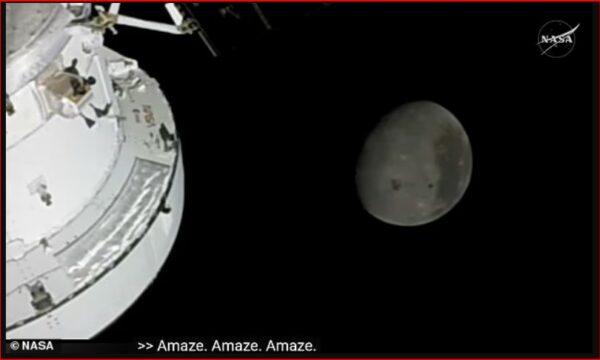
NASA astronauts are about to complete their historic journey around the dark side of the Moon, but the most dangerous part of the Artemis II mission is still ahead.
In the early hours of Saturday, the Orion module will make its final approach to Earth, completing its 685,000-mile (1.1 million km) journey.
At around 12:33pm BST, when the astronauts will be just 76 miles (122km) from Earth, the service module that supplies the spacecraft will separate from the crew capsule.
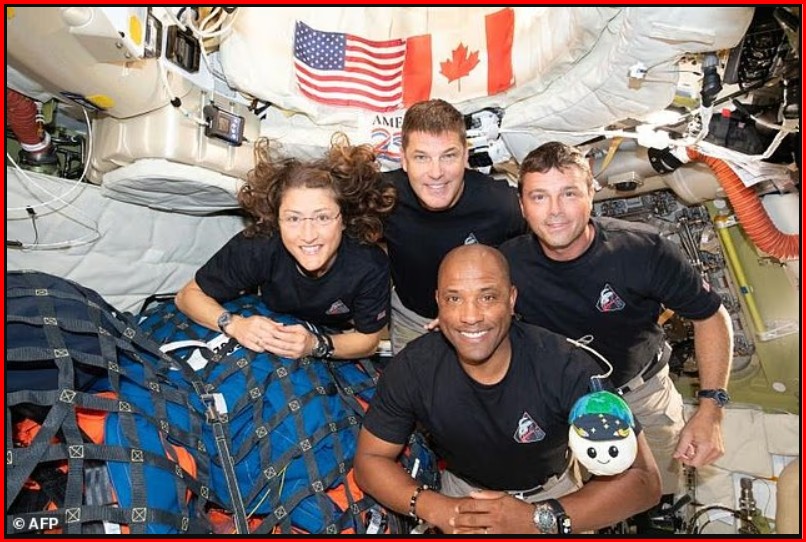
The crew – Reid Wiseman, Victor Glover, Christina Koch and Jeremy Hansen – will then face hypersonic reentry into Earth's atmosphere at speeds of 25,000 mph (40,230 km/h).
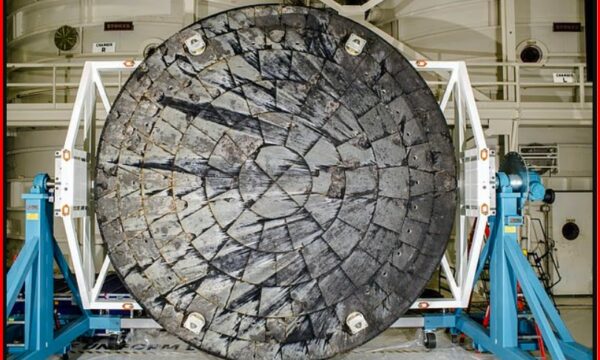
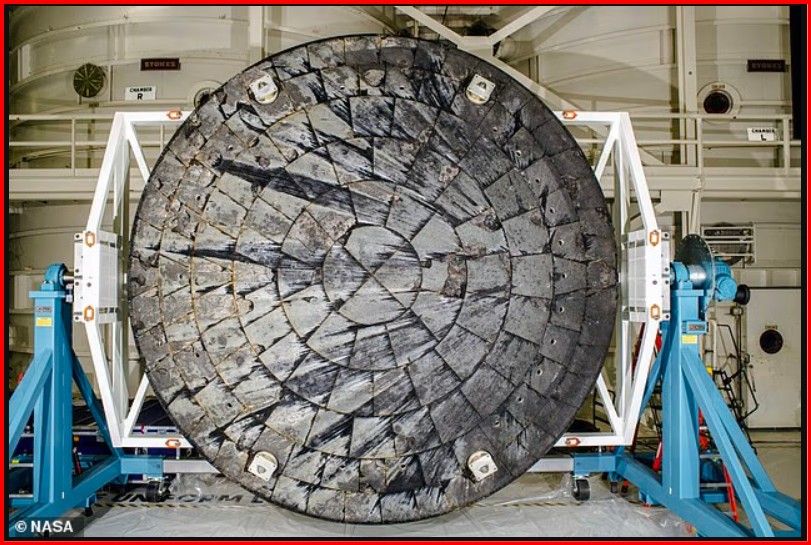
They will be protected only by a three-inch shield, which will protect them from the scorching heat of 2,760°C – approximately half the temperature of the Sun's surface.
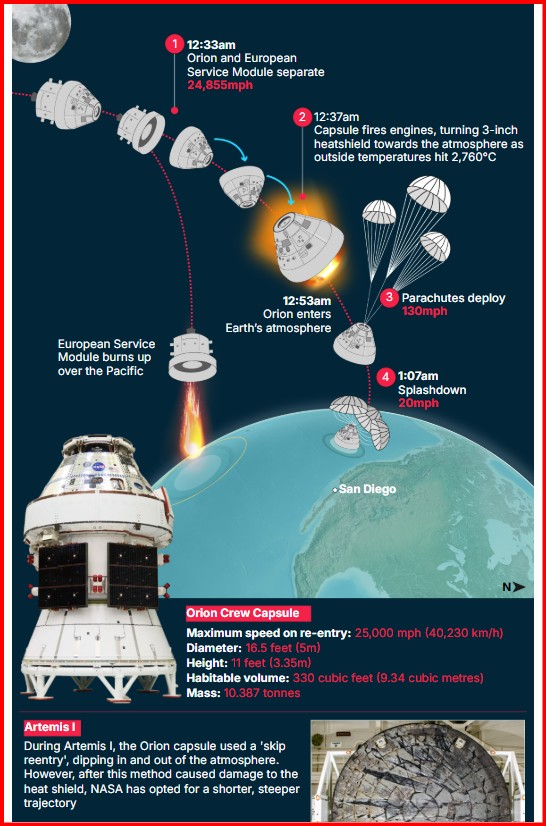
During this phase, an intense layer of superheated gas, known as plasma, forms around the ship, temporarily blocking radio signals and cutting off communication with the command center for several tense minutes.
After surviving the most intense heat, two small parachutes (drogues) will slow Orion to around 300 mph, while additional parachutes will be deployed shortly afterwards to reduce the speed below 20 mph, before the capsule lands in the Pacific Ocean at 1:07 a.m. BST.
NASA officials have warned that if the heat shield fails during reentry, there is practically no "plan B," as this phase is considered the most dangerous of the mission.
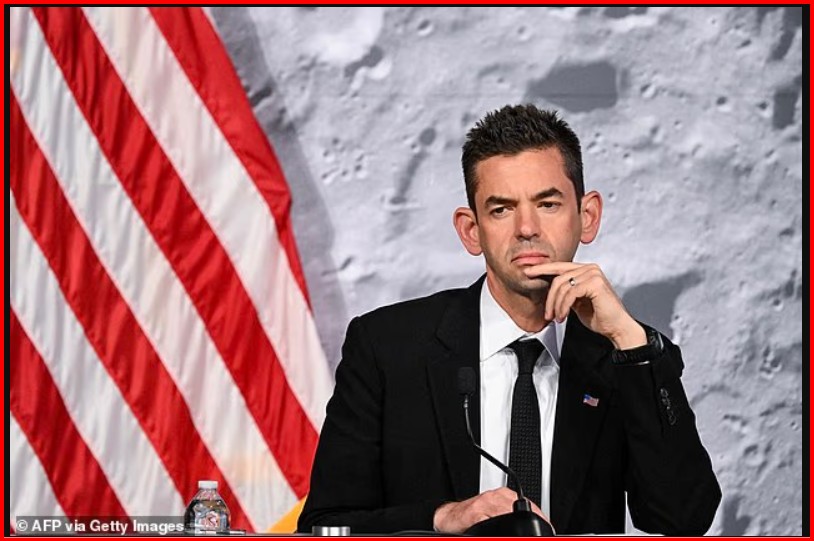
NASA Administrator Jared Isaacman said at a press conference: "My tension is going to be high until they're under parachutes in the water. There's no plan B. The heat shield has to work."
On the first Artemis mission, the uncrewed Orion spacecraft suffered extensive damage to its heat shield, losing pieces of material in more than 100 places, and large bolts even melted from the extreme temperatures. NASA has set a steeper reentry trajectory to reduce exposure time to high temperatures and reduce cracks in the shield.
The time from atmospheric reentry to landing in the Pacific near San Diego is expected to take about 13 minutes. "It's going to happen very quickly," said flight director Rick Henfling.
Weather conditions off the coast of Southern California are expected to be mostly favorable for the landing, as the US Navy's USS John P Murtha is en route to rendezvous with the capsule.
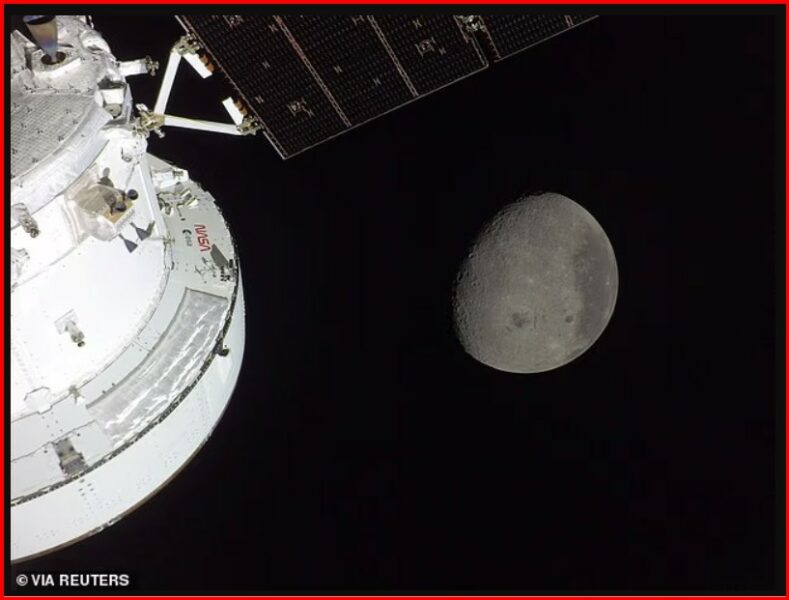
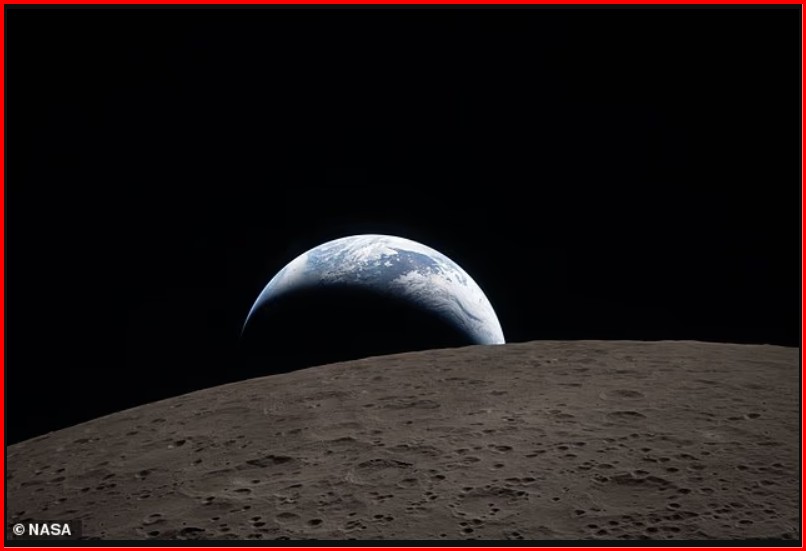
This is the first crewed flight to the Moon since Apollo 17 in 1972. The astronauts have shared incredible images, including 'Earthset', which shows the Earth setting over the lunar surface.
Reid Wiseman commented: “Human minds should not go through what they just went through. It is a true gift.” Pilot Victor Glover added: “I have not yet begun to process what we have been through. I will think and talk about this for the rest of my life.”
NASA aims to return a crew to the Moon by 2028, ahead of China, which plans to arrive around 2030. /GazetaExpress/












 t7 live

